Showing posts with label photography. Show all posts

Friday, January 22, 2016

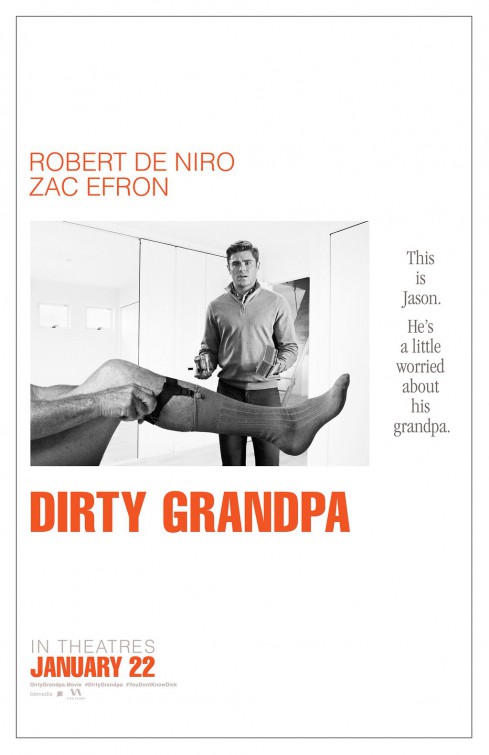
Dirty Grandpa


Dirty Grandpa 2016

Directed by Dan Mazar from a screenplay by John Phillips


This was my first promo screening this year, the only one I tried for so far, and it turned out to be an entertaining watch.  I told someone I hoped it would be like Bad Santa, and when I looked it up while waiting on the screening to start - yes!  Written by the team who brought you Bad Santa and Borat, among others. :D

First the good - it's rude as fuck, and really funny -  I laughed a lot.  It's sexy, silly, and sweet, and it has anti-materialistic, and follow your bliss, heart positive, along with sex positive values.  And in spite of the rudecrudeness, it's very family values oriented too.  De Niro and Efron have the most screen time, but I thought the scenes with the supporting characters had the best humour.  Aubrey Plaza kills, as an unashamed girl on the make, with that inimitable dead pan delivery of the filthiest lines.  She's got that schtick down pat. Adam Pally plays the most inappropriate cousin ever, and Jason Mantzoukas is an over the top ridiculous drug dealer with the best connections.

Now for the bad - it's super white bread, with a trajectory you can see a mile off, and it's chock full of stereotypes standing in for real people. The plot has Zac Efron as Jason Kelly, a thwarted photographer pushed into business law, who's about to get married to a horribly shallow fiance, in order to solidify his father's as well as his own career. Robert De Niro, Dick - of course that's his name - Kelly, wants to rescue him from that doom, by taking him on a spring break road trip to Florida.  Dirty Grandpa is an old school "real" man, ex-military type, reifying and endorsing paternalistic, patriarchal values, where women are sexual objects, and/or mothers, men bond by insulting and abusing each other, while shoring up their masculinity identities by putting down queers and women.  All that's framed as right on, men being men, kinda shit.

That it's casually and constantly homophobic was also irksome, especially since the way the token queer character is handled is supposed to redeem De Niro's queer-baiting commentary.

Dirty Grandpa spends all his interactions with this lone queer character,  Tyrone, (Brandon Mychal Smith), making fun of him,  until he witnesses him being harassed in a bar, by a group of homophobic and hostile black men.  Tyrone isn't capable of defending himself, of course -  It's De Niro to the rescue - with the aid of his Grandson - teaching Zac the importance of taking a punch to the face, and defeating them with his mad special ops skills - nobody makes fun of that queer but me!  Later he charms the same thuggy men with his weed and Wu Tang knowledge,  because that's what black people respect, I guess.  White man to the rescue!  And that's another thing - the big reveal on Dick Kelly is that he was training insurgents during his military career,  not just being a mechanic like his family thought.  Hmmm, I read that as unacknowledged superhero man, but the fact that De Niro has to keep that shit on the down low, and his country got major blowback in the form of 9-11 is pretty right on in terms of condemning those values. There was a scene where De Niro gives a major head injury to a jerky jock and that was just way too much too.  I dunno. I'm on the fence about this movie - is it condemning mas macho?  Kinda sorta depends on whether you agree with those values or not, I guess. 

Finally, I was totally squicked by a scene where a father sees his child interacting with Zac Efron in a way that looks sexually abusive, even though it's totally innocent, and also some by the way Aubrey Plaza fetishized De Niro's oldness.  Tell me that you've fallen and you can't get up - ridiculous right??? I might be reacting on an ageist level there, but it seemed like the implication was she was recreating previous sexual abuse.  In both cases I laughed, but there was definite discomfort - why da F did you go there??? - in my laughter too.  I'm uncomfortable when sexual abuse is made light of. :(

It's such a dumb movie that it's hard to take any of it seriously, though, and I think most people who will watch this, won't notice any of the things I took issue with.  And that's kinda sad, because the patriarchy is invisible almost always to the people who uphold it.


Friday, January 13, 2012

The Woodmans


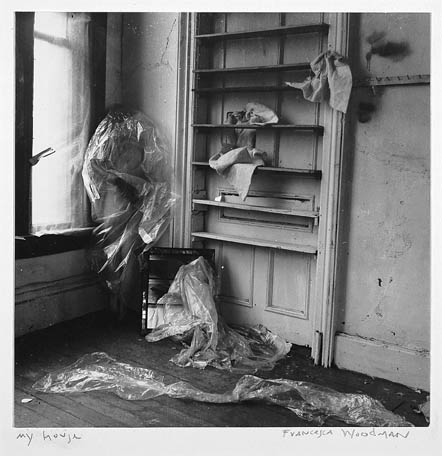
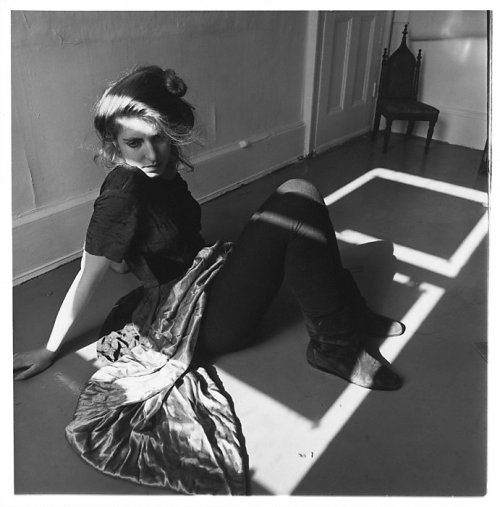
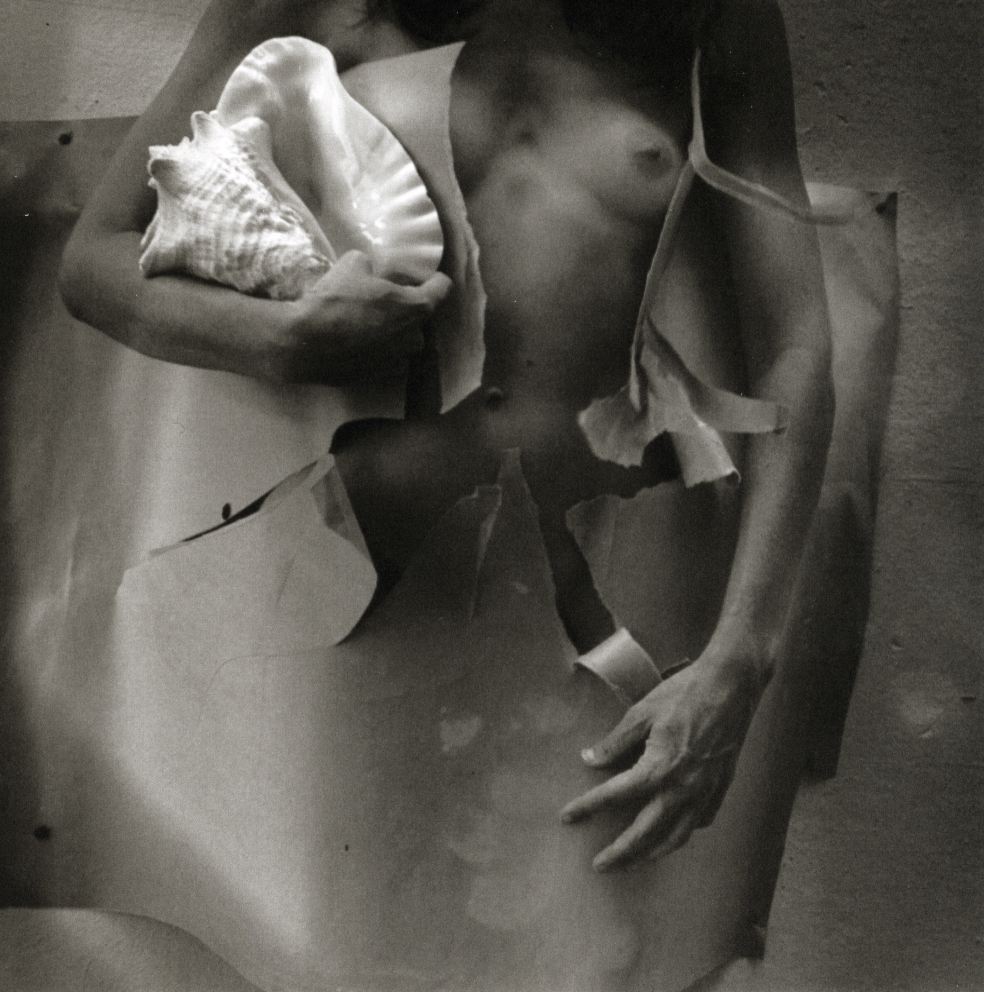
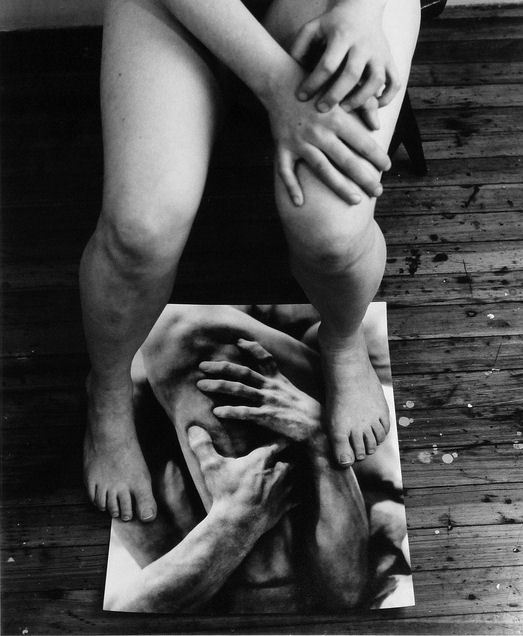
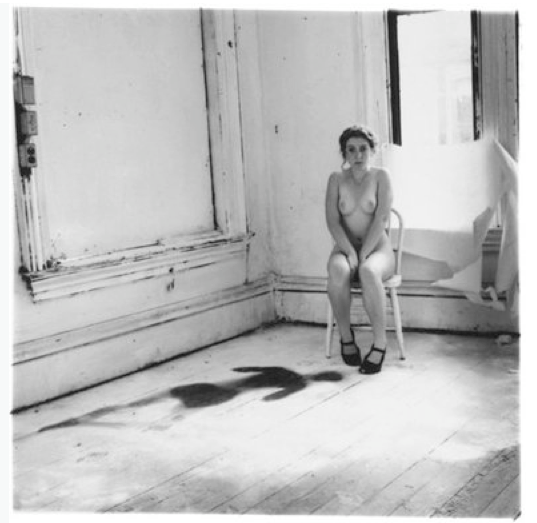
Last night I watched The Woodmans, a documentary directed by C. Scott Willis that played on PBS. It also played the VIFF last year and I saw a bit of it then. I liked it, thought hmm, inneresting, and figured it'd be summat I'd be able to watch later.  I wish I'd seen it then though, because much of the photographic work shown is nude portraiture and the nudity was blurred, framed by distracting little black boxes. Annoying.  Come on people, it's just some naked bodiness...it's art! Chill out already.  Anyhow, it's a documentary that's mostly about Francesca Woodman, a photographer who killed herself when she was 22.  Actually, it was more about her family; I guess that's why it was called The Woodmans, but Francesca definitely dominates. Her parents, Betty and George are artists, along with her brother Charles, but it was Francesca who garnered the most fame and acclaim. After her death, though.  Unfortunately, this is so often the case, that it's somewhat a cliché, and the fact that there is a glamour and romanticism accrued around the suicide of artists, is also a factor that I think contributed to her death wish.


A excerpt from Francesca's journal :

"This action that i foresee has nothing to do with melodrama. It is that life that lived by me now is a series of exceptions. I was (am?) not unique but special. This is why i was an artist. I was inventing a language for people to see the everyday things i also see and show them something different. Nothing to do with not being able 'to take it' in a big city or with self doubt or because my heart is gone"


Since Francesca was raised by artists, she was schooled from birth about the importance of art.  George, the painter father said about art and the work ethic, you don't wait until you're inspired.  You go to your studio everyday and sharpen pencils when you don't have an idea.  You get one eventually.  His daughter was  even more driven.  When her dad was visiting her in NY and complaining about his career, she asked him if he'd called anyone that day and admonished him, you make ONE career related call everyday. He had his most prestigious opening in a group show at The Guggenheim, 5 days after she died.

Francesca took her first photograph at 13, when her father gave her a 6x6 camera.  By the time she went to art school in Rhode Island she'd already developed a substantial portfolio.  One of her classmates noted, that they were there to figure out what they wanted to do, but she already had that down.  She was a photographer.


Self portrait at 13 - a punnish photo with the photo cable linking to a cable knit sweater.


She was amazingly gifted and preternaturally driven.  I think she was bipolar.  Not much is revealed about her mental illness, or what diagnosis she had. All that's shared is she killed herself during a depression. 

She had tried to commit suicide shortly before she actually succeeded.  Her family was able to intervene and save her, but they weren't able save her from herself for long. It can be very difficult to help someone who is mired in a trough of depression. What is the cure for despair?  How do you alleviate it?  Her father said, "We seemed to be able to do nothing in particular to help her, and I just think that things unravelled."  His face betrayed some emotion at this point.  Otherwise he was so, so, stoic when talking about her.  You'd never know the pain he felt at losing her.  And the mother, wow, she was really good at compartmentalising her feelings about that.  When asked how she dealt with the guilt, she said she tried not to feel it.


January 19, 1981, the day Francesca  jumped off the Barbazon building was, according to George, a bad day.  She didn't get the NEA grant she was waiting on, and trifling though it may sound, her bike was stolen.  George and Betty bickered a bit about whether she knew that she didn't get the grant, but George was adamant that she knew. Whatever prompted her decision to end it, she'd had enough. Living can feel like such a burden when you are depressed, the weight of endless days of null headed existence stretching ever on can be a palpably horrifying contemplation. "My life at this point is like very old coffee-cup sediment and I would rather die young leaving various accomplishments . . . instead of pell-mell erasing all of these delicate things…”


It seems to me that her high expectations were what killed her.  She was so focused focused focused on her art career, and the art world is a crucible of intent itself focused on fame and acclaim, where she wasn't achieving or being recognised in the way she wanted. And her personality was, as many described her, intense...she was intensely needy emotionally, craving validation.  “I am so vain and I am so masochistic — how can they coexist?”   It must have galled her tremendously that her talent wasn't recognised.  And she was young, only 22; I don't remember having much perspective when I was that age.


Her friend Sloane said, "She was a fragile person.  It caused her to make beautiful pictures."


There's a scene with Charles, Francesca's older brother and a video and electronics artist, as the family splashes around in the pool of their beautiful pastoral Italian summer home, he's talking about how they all have egos, they all make art, and no one's art is better than another's.  Even though that's true on one level, on another it sounds like so much sour grapes.  Neither his work, nor his parents' got the attention that Francesca's did, her fame in the art world completely eclipses theirs, and they all have had to deal with that inescapable fact.   He says also, that he felt different, but that Francesca was special.

Both her parents continued successfully on in their careers.  Her mother, mostly with ceramics and her father, mainly a painter.  But Francesca? The fame and success she never got to experience, eventually far outstripped theirs. As one friend said, "as time went on and the kids needed tuition or whatever, I'd pull out another Woodman print and sell it. I have a stack of them."  Her suicide and the subsequent interest in her body of work is the tragedy that informs the Woodmans' lives. She made photographs for 8 years and for all their creativity, they were merely the bloom of what surely would have matured into swaths more intriguing and complex work.  And that loss of her potential is also the tragedy of her suicide.  On making it to 77, her father said he enjoyed his perspective on life as a 77 year old and ruefully observed that his daughter never got to experience that.  "I think to stay alive is a pretty good thing to do."

Betty said that her work changed after Francesca died.  She stopped making functional pottery.  When an admirer of an installation said "Your work makes me feel good", Betty mused that maybe that's why she does what she does - that she's trying to make herself feel good.


Betty Woodman's installation piece for the American Embassy in Beijing,
in honour of the 2008 Olympics. She works on it throughout the documentary.


Some of her father's photographic work actually incorporates his daughter's photographs into his own, a form of memento mori.  His style mirrors hers, as if he became one of her disciples in order to honour her.   


Her sudden and premature death has inevitably shaped their lives, and as much as they are stoic about their loss, they are artists first and foremost. Their life is their work, and her work has become a part of their lives as well. Betty and George must be the executors of Francesca's estate; they are the ones who decide how their daughter's photography is shown and promoted. They have been able to nurture her career in a way they couldn't when she was alive, and small comfort, though it may be, I'm sure it's satisfying that they have been able to keep that aspect of her alive in the public eye. That her photography finally got the recognition and respect Francesca felt was her due, must give them succour.  Pride is what may have undone her, that and her mental illness, but in the face of her talent, at least their pride over what she accomplished, must mitigate some of their grief, at the loss of her.