Showing posts with label sexual abuse. Show all posts

Friday, January 22, 2016

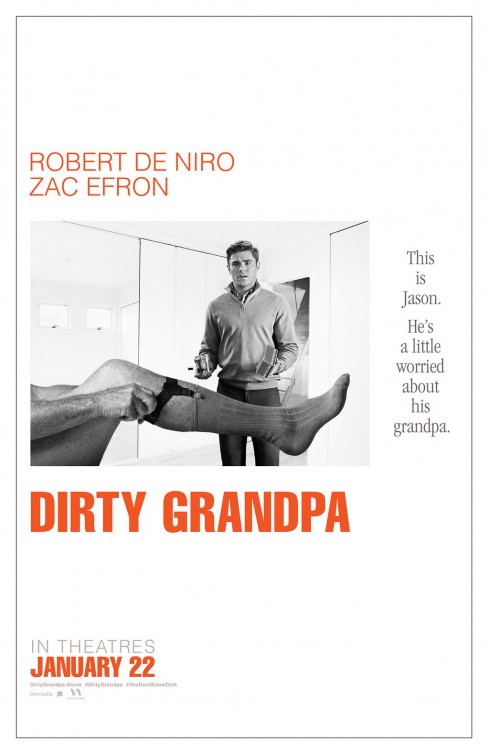
Dirty Grandpa


Dirty Grandpa 2016

Directed by Dan Mazar from a screenplay by John Phillips


This was my first promo screening this year, the only one I tried for so far, and it turned out to be an entertaining watch.  I told someone I hoped it would be like Bad Santa, and when I looked it up while waiting on the screening to start - yes!  Written by the team who brought you Bad Santa and Borat, among others. :D

First the good - it's rude as fuck, and really funny -  I laughed a lot.  It's sexy, silly, and sweet, and it has anti-materialistic, and follow your bliss, heart positive, along with sex positive values.  And in spite of the rudecrudeness, it's very family values oriented too.  De Niro and Efron have the most screen time, but I thought the scenes with the supporting characters had the best humour.  Aubrey Plaza kills, as an unashamed girl on the make, with that inimitable dead pan delivery of the filthiest lines.  She's got that schtick down pat. Adam Pally plays the most inappropriate cousin ever, and Jason Mantzoukas is an over the top ridiculous drug dealer with the best connections.

Now for the bad - it's super white bread, with a trajectory you can see a mile off, and it's chock full of stereotypes standing in for real people. The plot has Zac Efron as Jason Kelly, a thwarted photographer pushed into business law, who's about to get married to a horribly shallow fiance, in order to solidify his father's as well as his own career. Robert De Niro, Dick - of course that's his name - Kelly, wants to rescue him from that doom, by taking him on a spring break road trip to Florida.  Dirty Grandpa is an old school "real" man, ex-military type, reifying and endorsing paternalistic, patriarchal values, where women are sexual objects, and/or mothers, men bond by insulting and abusing each other, while shoring up their masculinity identities by putting down queers and women.  All that's framed as right on, men being men, kinda shit.

That it's casually and constantly homophobic was also irksome, especially since the way the token queer character is handled is supposed to redeem De Niro's queer-baiting commentary.

Dirty Grandpa spends all his interactions with this lone queer character,  Tyrone, (Brandon Mychal Smith), making fun of him,  until he witnesses him being harassed in a bar, by a group of homophobic and hostile black men.  Tyrone isn't capable of defending himself, of course -  It's De Niro to the rescue - with the aid of his Grandson - teaching Zac the importance of taking a punch to the face, and defeating them with his mad special ops skills - nobody makes fun of that queer but me!  Later he charms the same thuggy men with his weed and Wu Tang knowledge,  because that's what black people respect, I guess.  White man to the rescue!  And that's another thing - the big reveal on Dick Kelly is that he was training insurgents during his military career,  not just being a mechanic like his family thought.  Hmmm, I read that as unacknowledged superhero man, but the fact that De Niro has to keep that shit on the down low, and his country got major blowback in the form of 9-11 is pretty right on in terms of condemning those values. There was a scene where De Niro gives a major head injury to a jerky jock and that was just way too much too.  I dunno. I'm on the fence about this movie - is it condemning mas macho?  Kinda sorta depends on whether you agree with those values or not, I guess. 

Finally, I was totally squicked by a scene where a father sees his child interacting with Zac Efron in a way that looks sexually abusive, even though it's totally innocent, and also some by the way Aubrey Plaza fetishized De Niro's oldness.  Tell me that you've fallen and you can't get up - ridiculous right??? I might be reacting on an ageist level there, but it seemed like the implication was she was recreating previous sexual abuse.  In both cases I laughed, but there was definite discomfort - why da F did you go there??? - in my laughter too.  I'm uncomfortable when sexual abuse is made light of. :(

It's such a dumb movie that it's hard to take any of it seriously, though, and I think most people who will watch this, won't notice any of the things I took issue with.  And that's kinda sad, because the patriarchy is invisible almost always to the people who uphold it.


Thursday, January 26, 2012

Awful Normal


directed by Celesta Davis (2004)

Another documentary about sexual abuse, but this one focuses on the survivors rather than the perpetrator.  It's made by Celesta Davis and documents the process she goes through in coming to terms with her personal experiences with childhood sexual abuse.  She and her sister were both molested by a family friend and when they told their parents, the parents decided to simply ignore the abuse, which apparently was a fairly common practise in the swinging 70's.  Perhaps it was the permissive attitude around the sexual revolution that contributed to that, but I think it's more that childhood sexual abuse was a taboo subject that people didn't deal with very well. Anyhow, the impetus for the documentary came when Celesta learns via a news announcement over the radio that the son of her abuser was arrested for some kind of sex crime. She then decides to confront her abuser and to film everything along the way.
 
I watched this one on Netflix, via my ipod, while lolling in bed.  Lounging that is - I wasn't inclined to laugh out loud much while watching this flick.  I haven't watched many movies on the ipod, though it's pretty convenient.  Anyhow, I have a personal stake in the subject of the film, since I'm also a survivor of childhood sexual abuse, but I don't particularly agree with the process the sisters utilise.  I have no interest in having anything to do with my abuser.  I don't think I'd get anything out of it except stress, but the sisters, especially Celeste are convinced of the validity of meeting up with their abuser.  For them it was a good idea, but I thought the idea was gross.

The sisters do eventually get to talk with the guy and it made my skin crawl.  Celesta feels much better after the confrontation, and that made me wonder.  Did she have to meet up with him to have that closure?  What is closure anyway?  Can't you find peace about how you've been hurt without having to engage with the person who hurt you?  Isn't it giving the abuser more power if you let them run a number on you about why they did what they did?  Who cares why?  What they did was wrong, and they suck.  Leave it at that.  I think engaging with someone is only important if you want to continue a relationship with them, and let's face it, who wants to continue a relationship with the person who violated them?

I can understand wanting to unload to your abuser, and explicitly state how much they hurt you.  I support restorative justice and victim offender reconciliation processes.  I think though, that it's important for survivors to realise that it might not be very satisfying to interact with the person that hurt you.  Perhaps they will justify their actions or deny your feelings and experiences.

The  hope is that it's a healing encounter; the survivor says their piece, giving them peace of mind,  and the offender is forced to hear out the impact of their actions, and come face to face with the repercussion of their actions and be held accountable.  In optimal circumstances, the abuser is moved to sincere contrition and apologises, and the survivor is able to forgive them and move on.  But who cares about them, is how I feel personally.  You dun what you dun, and I'm done with you.  Maybe this is harsh, but from the perspective of a victim, the drama of dealing with an abuser doesn't offer much incentive since there's so much rumination over the abuse.  I think it can be psychologically damaging to focus attention on how someone hurt you, but I expect it's part of a process to recontextualise that past experience.  I simply question the necessity of including the perpetrator in that process.  It could just be my knee jerk reaction though, because it's fairly easy for me to not have anything to do with my abuser.  Perhaps this means I'm locked in some kind of eternal victimhood, but I don't think so.  I survived a terrible experience that plagued me for a good many years.  It happened to me when I was a little girl and I can't change that.  But lots of bad things have happened to me.  Lots of good things too.  My perspective now, is to try not to focus on the bad things.

I understand that survivors and offenders still have to live in the same world and restorative justice acknowledges that and attempts to make that a less painful reality.  One positive element of is this kind of interaction, aside from the possibility of it bringing peace to both the survivors and offenders, is that it might preclude further victims.   I'm dubious about that being a realistic outcome, but hope springs eternal. 


Wednesday, January 25, 2012

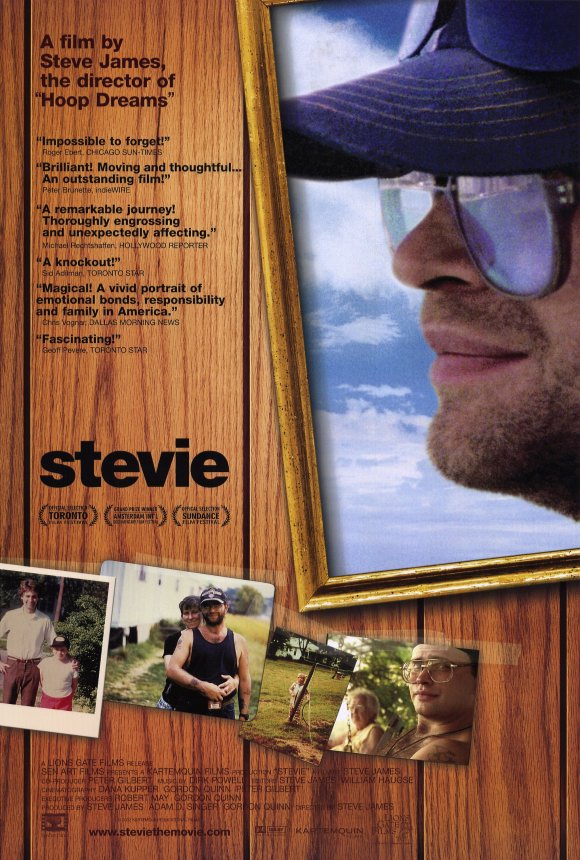
Stevie


directed by Steve James (2002)

What happens to the people we leave behind?

Steve James signed on with the Big Brother program when he was in college in the 1990's.  He and Stevie, (Stephen Fielding), established a bond when the boy was 11.  James finished college and moved on, but he didn't forget about Stevie.  This documentary is about him reconnecting with his "Little Brother", 10 years later.

I was about ready to throw in the towel pretty early on because the documentary felt exploitive of the disparities between a well to do film maker versus his simple minded rural redneck "Little Brother".   Then bam! Stevie is accused of molesting an 8 year old relative while babysitting.  What!?  Did we just enter the sordid zone?  Damn sure became compelling viewing after that revelation.  I couldn't stop watching.

Especially riveting are the interviews with Stevie's aunt, the mother of the victim. Her righteous anger is contrasted with some compassionate statements later on, and that is precisely what makes the documentary interesting.  It presents a fairly dispassionate viewpoint by illustrating the dynamics behind his upbringing,  and showcasing Stevie as he is:  a victim and victimizer both. Stevie wasn't a monster born in a vacuum;  it took a whole lot of abuse and neglect to create a man lacking the empathy and morals that would make committing such a terrible crime impossible.  His mother and grandmother are shown behaving badly with regards to him and each other. You hear about how his mom never wanted him and how horribly she treated him. The neglect and abuse is heightened when compared to the daughter she did look after, though the mom is no candidate for mother of the year with her regards to her daughter either.

Another really good sequence is when Stevie and his girlfriend Tonya, visit Chicago. Tonya is a sweet girl, and both Stevie and her have disability related incomes but they are talking about getting married even though that would affect both of their SSI monies.  In the city, they stay with Tricia, one of Tonya's high school friends. Tricia has cerebral palsy, which makes it a bit hard to understand her, but she's straight to the point with Tonya, and asks if he did it - sexually abused his cousin.  Tonya equivocates, but admits, yeah, there's evidence.  Tricia then talks about what happened to her personally with sexual abuse or assault, I'm not sure what but, Tonya knows what she's gone through in terms of bringing her abuser to justice.  Tricia may have a hard time enunciating, but she is super articulate on her own devastating experience.  She's compassionate towards Stevie, but she's first and foremost, Tonya's friend, and she prods Tonya to think about what kind of man Stevie actually is before taking steps towards marrying him.

Then there's the bizarre sequence with members of the Aryan Nation that had me shaking my head.  It takes all kinds I guess.

Stevie's had a sad, circumscribed, life and the tragedy is that it appears to have been an entirely avoidable corruption of his potential.  If he had been raised by people who loved and nurtured him, who knows what kind of man he might have been.  There's a part where the director puts Stevie in touch with a foster parent couple who were caring, and who Stevie obviously felt loved by, but they also talk about how they stopped Stevie from getting raped a few times when he was in the group home where they worked.  The implication being that they weren't able to protect him all the time, and for sure weren't able to protect him once they stopped working in that group home.

I felt really sad after I watched this.  I don't know that I can make a convincing argument that Stevie was exploited by the director, but I feel like he was.  It was inherently voyeuristic and I felt a bit of shame that I was being entertained watching this real life Jerry Springer show.  The fact that I feel simultaneously revolted and sympathetic towards Stevie means the director did a good job, though I don't think he deserves any commendations for deciding to make the documentary in the first place.  What was the point?  To illustrate how a system that fails kids creates adults who end up in jail?  I think that fact is well established, and this particular documentary doesn't bring anything but anecdote to that discussion.  The best thing that can result from this film, as the director in the interviw below states, paraphrasing Stevie's sister, "There are other families like hers out there, and this film might be able to help them."  While this is true, knowing there are other people who have gone through the same problems does make it easier somehow to bear up under that burden,  the film still feels sleazy and that potential benefit to society comes at the expense of a man who seemingly lacks the intellect to understand what he was getting into with the whole film making process.

Stevie was abused and neglected from the time he was born, and what he had to endure growing up can be seen as a blueprint for him becoming a criminal and a sex offender.  Instead of being reared in a safe environment he was tossed around and tormented, instead of being cherished and loved he was told how worthless he was and abandoned.  This documentary is an indictment of both the biological caregivers who failed him, as well as the social services that are supposed to step in to protect children from abuse and neglect.  Stevie never really had a chance.   He's a prime example of "falling through the cracks" in the social safety net.  I'm not trying to make excuses for his appalling behaviour, but seeing how he was raised, well it's more like he was trained on how to be a bad person than a decent one.

Maybe I am reactionary when it comes to my dislike of this film, but I don't think so.  If you took out the sexual abuse angle and showed Stevie being a run of the mill underacheiver, guilty of less heinous crimes, it would maybe feel even more exploitive, because then you wouldn't have his being a sex offender helping you to overlook and justify the fact that his squalid circumstances and entirely all too common life story are being shown as much for people's amusement as for any overarcing societal benefit.  Perhaps I'm being too cynical, but I really feel that many people watching this will do it with a disdainful eye, looking down with a perspective of superiority and disgust, at hillbilly rurals they judge to be their lessers.  Compassion for folk in dissimilar circumstances can be hard to come by.

I'm trying to seperate my feelings about Stevie in particular, from my feelings about the film as a whole.  I think it's guilty of the American fallacy of focusing on the individual and not seeing the forest for the trees.  It doesn't extrapolate Stevie's circumstances to the innumerable children in the exact same shoes as him, leaving that step up to the viewers.  It's an obvious conclusion though, so I hope viewers will come away with a sense of outrage that prompts more than the kneejerk conservative reaction towards criminals - lock 'em all up and throw away the key.  My hope is that they'll be putting it all together and thinking about the reasons why little kids grow up to become criminals, and that will make them want to make the world a better place, especially for children at risk.

 IMO, universal social programs as well as programs that target vulnerable populations are among the most effective ways to make sure kids are helped before they are damaged.  Once they're messed up, it's much harder to repair them, but it's not impossible.  Attempts made to heal kids who've been victimized by violence and neglect would reap so many benefits for society as a whole, not to mention for the abused kids who grow up and presumably make the same mistakes parenting their children.  The cycle will continue indefinitely, if we don't target money so kids are supported in ways that preclude them growing up to be prisoners.   I believe that, generally speaking, spending money on prisons is a misallocation of resources that should have been spent earlier - on child devlopment and societal structural supports.  That's a much better value for our dollar and would create a much healthier society.